
This review contains references to sexual assault, and spoilers.
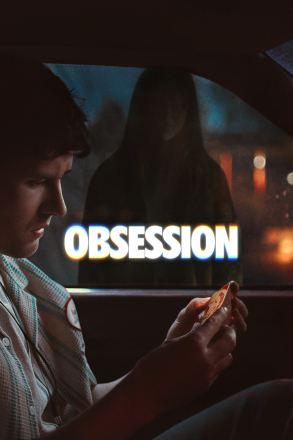
‘Obsession’ is a 2025 supernatural horror film directed by Curry Baker, an upcoming 26‑year‑old director. The film, which began as a low‑budget independent project, has become an international success. It now stands as the best debut for a horror film in recent decades and one of the most talked about releases of the 2020s. As someone who was initially apprehensive about the film and the hype surrounding it, I can say its success is well deserved — and, more importantly, its messaging feels incredibly relevant and relatable. Some of the best films, like this one, do not merely evoke emotional reactions; they provoke psychological catharsis through their analysis of modern power dynamics entwined with gender and relationships, making this film feminist as hell.
The story follows Bear, a young man who develops romantic feelings towards his friend and co‑worker Nikki. It appears at first to follow a familiar, well‑rehearsed trope: the “nice guy” falling for the hot girl who happens to be emotionally perceptive enough to make him feel seen, understood, and — most importantly — less alone. That latter aspect is especially capturing. Although we do not know the time where the film takes place – time is irrelevant in the supernatural genre. The relatability of this film is more prominent than ever; our society is lonely and is disconnected. As much as incel culture and its podcast-driven messaging may distort the picture, loneliness is experienced across the spectrum — and the so‑called “male loneliness epidemic” is something the film neatly ties into, or at least gestures towards as an inspiration of sorts.
The film opens with a scene of Bear confessing his deeply kept, vaulted feelings to Nikki. His confession is romantic, and some might even say lovely. But despite the initial feeling of romanticism spewing from this scene, the confession is very much shallow and rooted in how Nikki makes Bear feel. There is not much depth around those feelings or why he likes her. As mentioned, he seems more to want to fill his loneliness rather than have substantive feelings towards Nikki.
However, I believe also that lack of depth is omitted, and in this opening scene sympathy begins to form for this awkwardly love‑stricken man. He is an underdog; he is one of us. The alliance is immediately formed, whether consciously or not.
This initial premise of relatability is what makes the film a turning point in how we understand the difference between appearance and actuality. That demarcation also creates space for the gendered power dynamics that later reveal themselves in the most horrendous ways.
This particular theme — the nice guy not getting what he wants or desires — has been recycled endlessly in media culture. I would not say there is a gender empathy gap, but it has been constructed as a cultural theme strong enough for us to feel its effects. The “nice guy” as an unfortunate underdog — too kind, too socially awkward, peculiarly ties into an incel culture in a way. The man who on paper should be chosen by women because he is nice shares the mentality of the incel; entitlement. One can’t help but notice this uncomfortable truth: they share the same terrain of misogyny. After all, male goodness should be awarded, he deserves a romantic interest because he is nice. In that sense, the trope becomes almost ouroboric. The nice guy deserves a woman, but what happens if he fails, if he is rejected? When does entitlement turn into grievance, and eventual violence?
Back to the opening scene: Bear does not confess his feelings to Nikki. Instead, he practices on a stranger — a waitress — and his male friend mocks him, saying it’s far too lame to confess in such an honest way. Again, tying to almost toxic straight men culture, where being vulnerable is ‘lame’ and not ‘manly’ at all in patriarchal society.
Throughout the movie, Bear repeatedly cowards out of confessing his feelings, even when they are alone as he drives her home. Nikki even asks him directly whether he likes her. His response? Omission.
He takes out a novelty toy he purchased earlier that day — bought in a store where he was supposed to pick up a goodbye gift for Nikki, who is leaving their workplace to pursue writing. Once again, even in this mundane moment, he chooses cowardice over clarity, worrying whether a real gift would be well received. Instead of speaking, he hides behind the toy.
In the car, he makes a wish: “I wish Nikki loved me more than anyone in the entire world.”
In his defence, he did not know whether the wish could work. However, that wish — that single sentence — encapsulates a deeply distorted view of love, or rather the absence of it.
Bear makes a wish that obscures consent, free will, and the autonomy of another human being. He wants her to make him the centre of her world, but who cares that she might be her own person needing love? Most importantly, who cares that she should be able to choose whether he becomes the centre of her universe? His wish erases her ability to consent. He wishes for her to become his property.
That wish alone shows that the seemingly innocent “nice” guy is capable of wanting control over a woman. In many ways, it reveals the strange banality of evil: everyone is capable of harm, meaning many men would obscure consent if it meant getting what they wanted.
To his shock — and, let’s be honest, his pleasant surprise — the wish works. Although he is conflicted at first, Nikki suddenly begins making forward moves. Even though she is acting strangely, it doesn’t raise enough alarm for Bear. They begin a relationship, and we witness scenes of their honeymoon stage. They are a cliché: two love‑struck people in the early rush of romance.
It is not until the dinner scene, when Bear is told that Nikki may have lied about her father’s cancer, that he confronts her. Their mutual male friend informs him that Nikki and her father have been estranged for a long time, which only highlights the lack of depth in their relationship. This scene is crucial. Beyond Nikki’s meltdown, Bear realises that the person sitting in front of him is a product of his wish. When he asks whether she loves him more than anyone in the world, she says yes — more than anyone. And when he asks why it matters whether her father is dying, she tells him it doesn’t. He agrees. This is the exact punctuation of male entitlement embedded in patriarchal culture: as long as I have you, nothing else matters about who you are.
The next scene is disturbing, but also powerful. Bear has sex with Nikki — or rather, he rapes her, because nothing about the encounter is consensual. He knows this is the “wish‑Nikki.” In the scene, Bear is not even looking at her. She makes intimate noises, but her expression is blank, and we can see she is crying.
The scene was suggested by the actor playing Nikki, and I think it is a powerful choice. It shows how often we imagine rape and sexual assault as something that happens in a dark alleyway at the hands of a stranger — something clean‑cut, almost tangible in its simplicity. But this scene disrupts that myth entirely.
Statistically, that myth is not true. Many people — especially men — still struggle to understand what consent is, or are unwilling to comprehend how it can be expressed. Sometimes it is not a strict “no.” Sometimes it is body language. The scene is uncomfortable because it is real. It once again shows the banality of evil: abuse is not always clean‑cut, and it can come from someone who seems like a “good person,” someone we trust.
This is not to say that consent is complicated — of course not. But the scene encapsulates how consent has many forms, and how men are often willing to override them for the sake of their own desires. Their friends are concerned, but they are not intervening. In fact, Bear is often portrayed as a victim of some supposed manipulation tactics. Even Nikki’s friend Sara — who harbours her own romantic feelings towards Bear — is more worried about his wellbeing and whether he is a pawn in some game designed by Nikki. Once again, this speaks volumes: we see how a woman who appears more confident than Bear is assumed to have the upper hand, and how Sara, like many women, still carries internalised misogyny that leads her to side with a man rather than her own woman friend. Although the male friend does tell Bear, ‘It looks like you’re taking advantage of her’, the supposed concern ends there.
Bear avoids any form of responsibility for the state he has put the woman of his dreams in. Apart from saying things like ‘She’s the one who won’t leave me alone’, he decides to find a solution by calling the customer service line for the novelty toy. Of course, his request to the customer agent is not to cancel the wish, but to ‘alter it’ — which he cannot. The agent then asks, ‘Do you want to talk to her?’ and we hear Nikki’s agony and pain; her screams are chilling. The agent tells him, ‘It seems like you have a moral obligation toward her.’ Bear is barely fazed. He continues the relationship with a woman who is clearly not herself — who, in one scene, even harms herself. She is completely at his mercy, and her state of psychosis is treated as a mere inconvenience.
Once again, this showcases how male entitlement produces an “unbothered” desire for worship: men want devotion, but not to the point where it causes them inconvenience. And when Nikki — the real Nikki — briefly takes control while sleeping, she begs, ‘Please kill me, Bear.’ She is aware of what is happening to her but cannot stop it. His response — ‘What is so bad about being with me?’ — before he leaves the room, is devastating.
She even says, ‘I was never with you, Bear.’ At first, this can be interpreted as Nikki acknowledging that her being has been overtaken by the demonic version he wished for — and that is true. But the sentence also speaks directly to the one‑sided dynamic he created. She was never with him because she was never allowed to exist as herself. She was his echo chamber: the personification of his ego, his emotional and physical needs, met without her consent and without her presence.
This ties again into the male insecurity amplified in the age of technology and male podcasting — messaging that tells men to be protectors and providers while simultaneously not “simps” for women. These narratives amplify entitlement and create a fantasy of relationships as one‑sided dynamics, where the woman exists only to meet his needs. It’s not just about sexual intimacy; it’s about emotional intimacy being completely one‑sided. He is the only one being comforted or validated. And of course, that is not a real relationship — it is simply him using another person to fulfil his own emotional or physical needs.
A real relationship involves two people with their own lives, dreams, feelings, and disappointments. The woman who struggled to find meaning in her world, who worked a job that drained her passion for writing, is gone — erased by his wish. And Bear was happy to continue the relationship as long as her psychosis remained convenient for him. It is only when her suffering becomes inconvenient to him that he finally seeks to change the course of the relationship.
The distorted view is weaponised by incel podcasts, which prey on men’s insecurities and desperation for companionship. This online subculture further entrenches a vicious cycle by encouraging desire to replace substance and reinforcing a model of love in which men seek not a relationship between two people, but the fulfilment of a fantasy. Affection becomes synonymous with devotion, while substantive communication, mutuality and personal accountability are pushed aside. This cycle has devastating effects on everyone around them, but the collateral damage is often women, who are expected to inhabit those fantasies and accept an asymmetrical form of love.
Lastly, the end scene is particularly hard. When Nikki kills two of her friends under the force of her psychosis, Bear himself takes the pills in order to overdose — having been told by the customer service agent that his life is what keeps the wish‑Nikki alive and the real Nikki trapped.
When he dies, the real Nikki returns to herself, except she is surrounded by death. The film ends with her cries and screams. One cannot help but notice how abuse leaves victims with scars and trauma for life, forcing them to pay for something that was never their fault, while their abuser gets to walk away. In many cases, abusers not only avoid consequences but thrive. One can think of Woody Allen, Roman Polanski, or Chris Brown in modern culture, but people in ordinary circumstances can relate to this dynamic too.
Moreover, Nikki’s cries and screams are chilling because, for women, they are devastatingly familiar: nobody will believe her story. How many victims of domestic and sexual abuse are not believed by the state or even their own families? Her story will be dismissed as a figment of her imagination. Women in patriarchal culture are not only disbelieved — they are often demonised or even punished by law for reacting to their abuse.
The film brings forward a conversation about gender dynamics and patriarchal culture. Many men who would not consider themselves misogynistic or incels feel sorry for Bear. ‘All he wanted was to be loved’, they say, ‘and he paid the price for love.’ But there was nothing loving about his behaviour. He wanted to own a woman of his desire. She was his property. And now her story — her devastation — will not be believed. She will likely face punitive measures from the state. The film makes clear that Bear was the one obsessed, and that he destroyed his friend’s life to fulfil his own desire.
The film carries this messaging with force. It speaks volumes about how misogynistic and patriarchal culture can be instrumentalised by ordinary men. I can give credit where it is due: perhaps this Gen Z director is capturing a new generation’s pain, agony, and the issues that have always existed but have been amplified because they were never addressed in the first place. Perhaps the swath of reactions to this film — and the depth of analysis it has provoked — marks an opening act for a reckoning with the culture we live in. I also cannot help but notice how its themes echo the rise of AI that Laura Bates writes about, where AI reinvents misogyny through producing AI girlfriends and dolls. The film feels hauntingly relevant, and this conversation must be incorporated into contemporary feminism, as consent and a woman’s sense of self are being slowly eroded in an increasingly technologically‑mediated world. Perhaps this supernatural film is, after all, a real‑life film in disguise — its horror is grounded in the realities women face every day.
Comments?We welcome replies, corrections and debate pieces. Contact us