
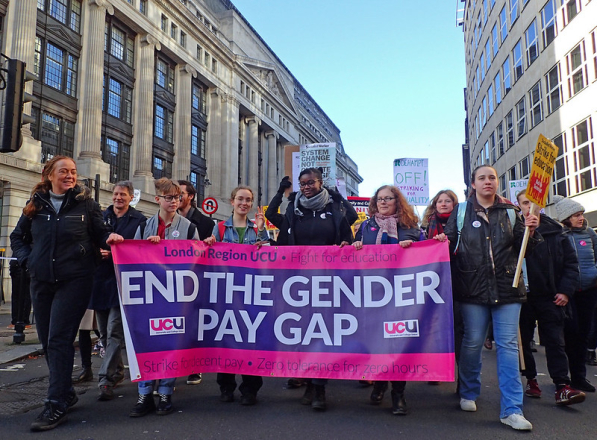
Before the emergence of the “Second Wave” women’s movement many feminists, socialists and liberals knew that there was something deeply unfair, disturbing even, about women being restricted to a life of domestic drudgery at home and excluded from economic and public life. Although working-class women had always worked outside the home they were often restricted to domestic service, localised industries and/or highly precarious and marginal jobs. One of the Second Wave’s achievements was to draw attention to the restrictive role of the family in women’s lives, while also showing how the daily reproduction of human life in private households was important to capitalist accumulation. The labour of social reproduction, in particular the numerous household tasks carried out by women and girls, was embedded in wider economic and social processes. Workers’ Liberty has built our politics on this insight. From our 2015 conference policy document:
“The family has been a key instrument for capitalist accumulation (helping to depress wages and ensure the reproduction of workers' labour power), a means by which working-class families can survive (pooling resources and providing emotional sustenance), and the origins of a lot of oppression (the gendered division of labour, gender stereotypes, domestic violence). Women's oppression is complex – bound up in both class, and cultural and ideological realities. We also see women’s oppression as providing the grist for some other oppressions: rigid ideas about gender presentation, gender roles in the nuclear family, and ideas about ‘masculinity’ and ‘femininity’ fuel some homophobia and transphobia, though these often have separate religious or political ideological roots too.”
Our analysis here has some things in common with ‘social reproduction theory’ which argues “the relation between labor dispensed to produce commodities and labor dispensed to produce people [is] part of the systemic totality of capitalism” (Tithi Bhattacharya). Some comrades have written on the usefulness of this framework. However, whatever the theoretical perspective, we should review the up-to-date data on the paid and unpaid work that women do. To that end, this article surveys some of the current UK data on women’s waged work — rates of employment, pay, gender segregation in the labour market. It also looks at whether the gender division of labour in households has changed in the last few decades.
The most dramatic change has been in the rising percentage of women in waged employment in the UK. It is now very close to that of men. In February-April 2025 16.7 million women in the UK aged 16-64 were in employment and 17.5 million were economically active — equivalent to a 72% employment rate and a 75.5% economic activity rate. That is only moderately less than that of men (78.2% and 82.6% respectively). The employment rate for women is now very close to its pre-pandemic high of 72.7%.
Near-equality of employment rates has, however, not erased other inequalities. These are: persistent unequal levels of pay between men and women, a continuing unequal division of labour between co-habiting hetrosexual couples over caring responsibilities and other household labour; and persistent labour market segregation on gender lines. I argue these inequalities — pay, unequal burden of household labour, segregation — interact and reinforce each other.
One important note: it is not possible, and it is debatable whether it is desirable, in, for example, employment statistics, to disaggregate data on trans people. This article, where it talks about ‘men’ and ‘women’ therefore uses the aggregated figures of official statistics necessarily covering both cis and trans and non-binary people and will not be correctly categorised. It is important to note that transgender people often experience, on average, even lower pay and/or higher unemployment. The Living Wage Foundation, analysing the government’s 2018 National LGBT survey, argues that because one-in-eight LGBT+ people are affected by discrimination at work, it is likely that both rates of employment and pay are affected. According to the 2018 survey trans people were less likely to have had a paid job in the 12 months preceding the survey; just 65% of trans women and 57% of trans men had any sort of job.
WOMEN IN WORK AND THE DUAL ROLE
Although women’s participation in the capitalist labour market, including that of married women, has never been marginal, today’s employment figures represent a radical economic and social transformation. At the time of the 1901 census around four million, or less than a third, of all girls and women aged 10 or over in England and Wales were in work. According to the 1911 census, 1.35 million women in England and Wales worked in domestic service. Women’s employment in war industries brought many more women temporarily into waged work and broadened their social expectations. By 1918 36% of all working-age women were employed; at the peak of World War Two up to 90% of single women aged 18 to 40 years were in war work.
After the wars a combination of explicit rules and informal practices excluded women from many jobs and consequently reduced women’s participation in work. However, after World War Two industrial change, incremental improvements in legislation and shifting social attitudes led to an increase in women’s participation in waged work. Between 1951 and 1960 the average number of women who were economically active was 6.91 million women (a rate of 36%); between 1961 and 1970 the average was 8.35 million (a rate of over 50%).
After 1971 women’s economic activity and employment in the UK gradually rose; the rate of increase flattened out in the late 1980s and early 90s, then speeded up in the 2010s. In 1971 the rate of economic activity for women aged 16-64 was 55.5% and thus has risen by 20 percentage points. In contrast, the rate of economic activity for men has dropped. In 1971 this stood at 95.1% and thus has dropped by roughly 13% percentage points. Men’s economic activity rate decreased very gradually; the peak of the rate of decrease came in the early 1980s and mid-1990s. Since 2020 it has stabilised.
The steep increase in women’s employment after 1970 mirrored faster social transformation, particularly for married women. There were increasing opportunities to break out of the default status of “housewife” and/or “mother”, the isolation of the home, and gain some financial independence. Millions of women took those opportunities. As the historian Helen McCarthy notes:
‘According to census data … 26% of married women were employed outside the home in 1951, 35% in 1961 and 49% by the early 1970s. Much of this growth was amongst older women with school-aged or grown-up children, but the figures also included the increasing numbers of young wives who chose to continue working after marriage and up to the birth of their first child. Earlier marriages and smaller families meant that the average British woman would complete the main business of childbearing and rearing by the age of thirty-five or forty, leaving her twenty years or more of productive working life, a pattern commonly referred to as the “dual role”.’
The dual role — combining work and taking primary responsibility for parenting — remains a big cog in a system of gender inequalities. Not all women have children but, because around 84% of women will have at least one child in their life course, and just less than half of all working-age women are currently involved in looking after children the effects of the dual role impact on most if not all women. For women, having a child will lead to a short period of maternity leave followed by either a return to the exact same job, or the switching of jobs and roles or, for many, a reduction in hours and even dropping out of work. Some women feel forced to choose part-time work or gender-typical work which may be less stressful. One study has found nearly 33% of women in a poll opted for a less stressful or “family friendly” job after having children. Jobs in the health and social care sector, and teaching assistant jobs were perceived to be more family-friendly. Many women also take demotions. In this way lower-pay and career-limited kinds of work become entrenched as ‘women’s work’. That said, everyone in part-time, or gender-typical work, whatever their gender, is affected by the worse pay and conditions.
Overall, the periods where primary carer parents are out of the labour market are shorter than they were in the past, not least because pre-school nursery and childcare provision has expanded and in the last few years through government subsidy. There is a strong desire from women with children to stay in work. It is estimated that five million women would be willing to work longer hours if they had access to more flexible working.
Men can no longer be considered, as the feminist sociologist Joan Acker put it, “the archetypal worker”, the worker who is free to focus fully on work unencumbered by the responsibilities of childcare. Nonetheless, women in hetrosexual two-parent households are more often the people taking some time out of work, spending more of their time looking after children.
It is worth noting that through the entire period, the rate of economic inactivity (people of working age who are not looking for work) for all people has maintained at a steady level of 20-25%. However the gender ratios have changed radically. In 1971 a full 90% of economically inactive people were women whereas today, the figure is 54%. The four biggest reasons for economic inactivity are: being in full-time education (mostly 16-24 year olds), long-term sickness and disability, looking after family (mostly 24-49 year olds) and early retirement (the 50+ age group). However these categories are unevenly distributed between men and women and only some of the percentages have changed over the last 20 years. At the start of 2026 5.4 million women (24.5%), compared to 3.7 million men (17.6%), were economically inactive. In some minority ethnic groups very high numbers of women are economically inactive — 48% of women from Pakistani and Bangladeshi communities for example.
Eleven million people in the UK live with long-term health conditions but the majority are either working (seven million) or retired. An increase in ill-health has been disproportionately prevalent among women. And 1.5 million women are out of the workforce due to long term sickness, over 200,000 more women than men. Levels of employment are lowest among people living with a mental health condition (two million out of a total of four million). Levels of economic inactivity due to ill-health have been trending upwards, after years of stability before the pandemic. TUC research suggests women's vulnerability to ill-heath is linked to the fact that they are more likely to be in insecure and low paid jobs, with minority ethnic women 103% more likely to be on zero hours contracts than white men.
In the UK, about 27% of women are disabled compared to 22% of men. According to TUC 2020 research the employment gap between disabled women and non-disabled men was 32.6 percentage points and the gap between disabled BAME workers and non-disabled white people was 34.7 percentage points. The overall disability employment gap was 28.4 percentage points.
According to last year’s ONS Annual Population Survey some 1.4 million women who are economically inactive said they were “looking after family or home”. The same is true for .3 million men. Roughly the same percentages of women (71%) and men (67%) in this situation said they did not want a job. In addition 73% of women in part-time work said they did not want a full time job and a large number of men, 54%, also said the same. The extent to which this is actually a positive choice cannot be revealed by the official statistics. However, it bears out the findings of other studies which show men tend to grow more attached to employment and full-time employment on becoming parents.
The number of economically inactive women looking after family has fallen in younger age groups but remains high/the same in older age groups (as high as 52.1% for women aged 25-49). Overall, the figures reflect a complex mix of women having children later in life, having less children on average, looking after dependent adults later in life. Much larger numbers of women than men spend at least some time being economically inactive while looking after family. The percentages of men in this category and any age group are no more than 13%. Only men who are 50+ have become more likely to be looking after family (from 5-6% to 7-8%).
Figures on the proportions of men and women looking after dependent children tell a slightly different story. Here, just 100,000 men (1.5% of men with children) were economically inactive and looking after their children. In comparison 1 million women or 12.3% of women with children were doing the same. For working parents 6.3% of men compared to 32.8% of women were working part-time. All parents are more likely to be economically active while their children are 0-2 years old, followed by the years 5-10 (often a time when juggling work and childcare, especially of multiple children becomes most fraught). The employment rate for lone mothers who head up 84% of lone-parent families is 67.1% — significantly lower than that of other mothers — versus 80.1% for lone fathers.
PERSISTENT INEQUALITY: PAY
The full-time gender pay gap has decreased by nearly a quarter over the past decade and now stands at 6.9%. However the median hourly pay for men in both full- and part-time work is still £19.17, compared to £16.71 for women; weekly median pay is £740.60 compared to £556. The overall pay gap is now 12.8%. Low pay is defined as below two-thirds of hourly full-time median wages. That is close to the current national minimum wage for over 21 year olds (£12.71 per hour) but under the Real Living Wage (£13.45 per hour). In 2025 4.4 million jobs were paid below the Real Living Wage and 2.5 million women, compared to 1.8 million men held those jobs. According to the Living Wage Foundation this gap has closed somewhat. There are no figures comparing the mean hourly pay of white women and women of colour. However there are official “ethnicity pay gap” figures which are shocking. They stood at 21.1% for Asian people, 29.7% for Black people and 5% for other groups.
Recent years have seen the rise in part-time work for all genders. In the three months to February 2026 6.22 million women (37%) were working part-time compared to 2.5 million men (14%). Part-time work tends to be less well paid than full-time work. The median hourly pay of all full-time work is £19.74 but £14.11 for part-time work. Men’s median part-time hourly wage rate is actually lower than women’s (£13.85 for men compared to £14.25 for women). This may reflect a higher number of women working in higher paid work, but on a part-time basis.
The gender pay gap increases over time. For full-time employees aged 22-29 the gender pay gap is 0.9% and for those aged 30-39 it is 3.9%. For those aged 40-49 it is 9.1% and those aged 50-59 it is 12.6%. The Women’s Budget Group strongly argues this pattern of a rise gap between the ages of 30 and 50, mirrors the “child bearing” years; it increases by approximately 21% between the birth of the first child, and the child’s twentieth birthday.
A GENDERED LABOUR MARKET
Segmentation of occupations by gender remains pronounced with women more likely to be employed in certain sectors and jobs that have lower median pay. For example, 77% of all jobs in the health and care sector and 71% of jobs in the education sector are held by women. There is further segregation on racial lines as well. For example, 20% of all working-age Black African women are employed in health and social care roles. Some jobs in these sectors are higher paid but vertical segregation is a factor in the pay gap everywhere. 13% of men work in managerial/senior posts compared to 8% of women. In school teaching, where men are 24% of the workforce, there is an 18.8% pay gap. This is because more men work in secondary schools and hold senior posts.
The ONS ‘Labour Force Survey’ puts occupations into nine broad categories where the ratios of men to women in these categories are sometimes equal but more often unbalanced. In order of levels of pay with the highest first: more men than women are managers, equal numbers are in professional occupations (scientists, engineers, doctors) and associate professional occupations (technicians), many more men are in skilled trades, many more women are in administrative and secretarial jobs, many more men are process and machine operators, many more women are in caring and similar service roles, slightly more women are in sales, equal numbers are in elementary occupations (cleaners, warehouse workers, postal workers).
Men are much less frequently, rarely or never employed in stereotypically “jobs for women” whereas women sometimes have stereotypically “jobs for men”. The list of jobs men hardly ever do is long and includes: early years education (all jobs), floristry, veterinary nursing, nannying, paediatric nursing, speech and language therapy, psychotherapists, legal secretaries, midwives, dental nurses, childminding, school secretaries, medical secretaries, personal assistants, teaching assistants. In all these occupations women constitute 90% or more of the people.
Although there are equal numbers of men and women in so-called “professional occupations” and “associate professional occupations”, reflecting women’s higher and even superior educational attainment, there is still a great deal of gender differentiation. There are roughly equal numbers of men and women scientists but many less women than men in engineering or IT. On the other hand, more women than men are doctors, dentists and vets.
There are strong historical factors behind occupational segregation. Some of this is accidental: the expansion of service sector jobs occurred at the same time as the rise in women’s employment. Women went where the jobs were. Certain occupations were or still are perceived to be a “better fit” for gender stereotypes about women: secretarial, caring, teaching, social work, retail work and otherwise “people oriented” work. It is even said that capitalism’s emphasis on self-actualisation encourages girls and women to aspire to be doctors and nurses and not plumbers and train drivers. More importantly, the sexist culture associated with certain work organisations informally discriminates against women or puts them off. Then there is the fact that jobs “for women” were associated with women’s role as secondary breadwinners. This will not shift without fights for higher wages. Equally the perception that “trade work” such as plumbing is more “skilled” than secretarial work will not shift unless we reconceptualise what is skillful.
Persistent inequality: an unequal division of labour in the household.
Has the sharing of household labour in the UK’s 11.3 million hetrosexual couple households changed in the last few decades? Attitudes have certainly changed. According to the National Centre for Social Research (NCSR) :
• Agreement among people in two-person hetrosexual households with the idea that men should earn money and women should look after the home dropped from 48% in 1987 to 9% in 2022.
• In 2012 31% felt mothers should stay at home with pre-schoolers. 18% now think this.
• 33% of people think while children are young women should work part-time and fathers full time. To that extent, among a significant number of people, a real world solution to managing childcare and work has become a norm.
Men want to spend more time with their children — a good thing. According to the NCSR’s survey 18% of people would like both adults in their family to work-part time. According to ONS 2022 figures, working fathers spend 5 hours 24 minutes per day on childcare. That seems like a lot, but perhaps it is not childcare as such, but simply being at home while children are awake. Working fathers spend around 65% of the time working mothers spend on childcare; in 2014-5 it was 54%. Other studies give different estimates. A 2022 survey commissioned by the Centre for Progressive Policies estimated men looked after children for 22 hours a week and women 45 hours (i.e. men do just under 50% of the childcare). Other studies show fathers’ time tends to be spent on developmental tasks such as chatting, helping with homework, reading stories and kicking footballs.
When it comes to housework, although there has been some progress women are still doing more than men. According to the NCSR research:
• Women do more household shopping (43% compared to 54% in 1984; 41% share the task equally)
• Women more often make the evening meal (54% compared to 77% in 1984, 26% share the task equally);
• Women do most of the household cleaning (54% compared to 72% in 1984; 30% share the task equally).
• Women do most of the washing and ironing (65% compared to 84% in 1984; 27% share the task equally.)
The ONS surveyed a different range of activities in 2015 for timings, showing men spending more than 50% less time on laundry, housework, childcare and cooking. Only in one task, transport, do men do more than women. OECD figures show UK women spend around 110 minutes more time a day on household work including caring than men. The comparative figure in Sweden is 50 minutes and in Portugal around 230 minutes.
Some sets of data show that because women on average do less hours of paid work, men and women wind up doing roughly the same work (unpaid + paid work) in their week. But is an unequal burden of household labour falling on women fair? In other sets of data women’s time in household work has not declined enough to compensate for the larger increase in their paid time. It is also true that the automation of household activities has helped everyone to reduce the time they take on household labour. But every gain can be offset by new sources of labour. For example, before an online shop is done, there must be meal planning. These sorts of “hidden” labours are associated with the tasks which are still mostly done by women.
The figures vary but clearly some progress in sharing of tasks has been made. Yet we shold not overlook the fact that this has slowed down or been limited. No doubt the cultural ideas and practices which are really oppressive to many women — expectations of endless domestic drudgery — will continue in many households.
CONCLUSIONS
When women were more confined to the home, the role of the family appeared very important to socialist feminists as they were not accepted as full-time workers or the main breadwinner even when they needed to be. That is no longer the case. On the other hand, although women are much more likely to work while having dependent children, and most fathers share the load of parenting, women’s ‘dual role’ is still a ‘dual burden’. For women the stress of combining primary care responsibilities with the necessity of and desire to work is a structural circumstance, imposed on them by how capitalism is organised. Women make more compromises than men, in terms of their hours of work and the type of work they do and accept a cut in their life-long income. Many working-class parents will reasonably feel these stresses as a shared circumstance, but women are more bound to these circumstances.
Women’s situation institutionalises low pay and forms of super-explotation at work — all very convenient for capitalism. The labour movement is attuned to some of these issues, low pay for example, but not the overall economic injustice shaped by the ‘dual role’. For example, there is very little discussion let alone action taken by the labour movement on occupational segregation by gender. This despite the fact that there are more women than men in UK unions — 3.7 million (56%) compared to 2.9 million (44%). These gender inequalities underpin cultural subordination; they engender bullying, harassment, coercion and violence in both inter-personal relationships and at work. It perpetuates sexism and misogyny.
There are many campaigns and policies we can fight for which, if won, could help improve the lives of all working-class people and cut some of the roots of women’s oppression.
A short list of things we can fight for
• A cut in the working week for all workers. For parents the working day should align with the school day.
• Free, good quality, flexible childcare with a highly paid workforce. That need not mean, as it does now, that children are out of the home in a childcare setting for long hours but that childcare fits around the needs of parents and children alike.
• Longer and more flexible parental leave at full rates of pay making it affordable for all parents to take leave.
• Work that is flexible for all workers — the right to change hours and shift patterns, to take special paid leave for all caring responsibilities, to take sabbaticals.
• Defend and extend benefits for disabled people and the long-term sick. Increase sickness pay.
• Rethink “equal pay”. Reconsider the distinctions between “skilled” and “unskilled” work. Prioritise campaigns against low pay.
Comments?We welcome replies, corrections and debate pieces. Contact us