
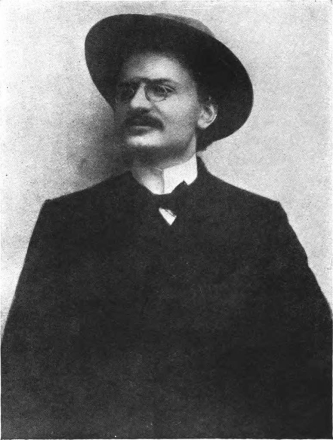
30 July 1936
Even now, in the midst of civil war, the Popular Front government does everything in its power to make victory doubly difficult. A civil war is waged, as everybody knows, not only with military but also with political weapons. From a purely military point of view, the Spanish revolution is much weaker than its enemy. Its strength lies in its ability to rouse the greater masses to action. It can even take the army away from its reactionary officers. To accomplish this, it is only necessary to seriously and courageously advance the program of the socialist revolution.
It is necessary to proclaim that, from now on, the land, factories, and shops will pass from the hands of the capitalists into the hands of the people. It is necessary to move at once toward the realisation of this program in those provinces where the workers are in power. The fascist army could not resist the influence of such a program for twenty-four hours; the soldiers would tie their officers hand and foot and turn them over to the nearest headquarters of the workers’ militia. But the bourgeois ministers cannot accept such a programme. Curbing the social revolution, they compel the workers and peasants to spill ten times as much of their own blood in the civil war. And to crown everything, these gentlemen expect to disarm the workers again after the victory and to force them to respect the sacred laws of private property. Such is the true essence of the policy of the Popular Front. Everything else is pure humbug, phrases and lies!…
The workers’ party that enters into a political alliance with the radical bourgeoisie by that fact alone renounces the struggle against capitalist militarism. Bourgeois domination, that is to say, the maintenance of private property in the means of production, is inconceivable without the support of the armed forces for the exploiters. The officers’ corps represents the guard of capital. Without this guard, the bourgeoisie could not maintain itself for a single day. The selection of the individuals, their education and training, make the officers as a distinctive group uncompromising enemies of socialism. Isolated exceptions change nothing. That is how things stand in all bourgeois countries. The danger lies not in the military braggarts and demagogues who openly appear as fascists; incomparably more menacing is the fact that at the approach of the proletarian revolution the officers’ corps becomes the executioner of the proletariat.
To eliminate four or five hundred reactionary agitators from the army means to leave everything basically as it was before. The officers’ corps, in which is concentrated the centuries-old tradition of enslaving the people, must be dissolved, broken, crushed in its entirety, root and branch. The troops in the barracks commanded by the officers’ caste must be replaced by the people’s militia, that is the democratic organisation of the armed workers and peasants. There is no other solution. But such an army is incompatible with the domination of exploiters big and small. Can the bourgeois and petty-bourgeois republicans agree to such a measure? Not at all. The Popular Front government, that is to say, the government of the coalition of the workers with the bourgeoisie, is in its very essence a government of capitulation to the bureaucracy and the officers. Such is the great lesson of the events in Spain, now being paid for with thousands of human lives.
But here we are interrupted by the exclamation, “How can one dissolve the officers’ corps? Doesn’t this mean destroying the army and leaving the country disarmed in the face of fascism? Hitler and Mussolini are only waiting for that!” All these arguments are old and familiar. That’s how the Cadets, the Social Revolutionaries, and the Russian Mensheviks reasoned in 1917, and that’s how the leaders of the Spanish Popular Front reasoned. The Spanish workers half-believed these rationalisations until they were convinced by experience that the nearest fascist enemy was to be found in the Spanish fascist army. Not for nothing did our old friend Karl Liebknecht teach: “The main enemy is in our own country!”
16 August 1936
The question most on my mind concerns relations between the POUM and the syndicalists. It seems to me it would be extremely dangerous to let oneself be guided exclusively or even primarily by doctrinal considerations. At all costs, it is necessary to improve relations with the syndicalists, despite all their prejudices. The common enemy must be defeated. The confidence of the best syndicalists must be won in the course of the struggle. Before October we made every effort to work together with the purest anarchists.
The Kerensky government often tried to use the Bolsheviks against the anarchists. Lenin resolutely opposed this. In that situation, he said, one anarchist militant was worth more than a hundred hesitating Mensheviks. During the civil war the greatest danger is lack of decisiveness, a spirit of equivocation, in a word — Menshevism.
25 February 1937
One does not demonstrate one’s friendship for a revolutionary organisation in a difficult situation by closing one’s eyes to its mistakes and the dangers arising from them. The situation in Spain can be saved only by an energetic, radical, and heroic comeback of the left wing of the proletariat; thus an immediate regroupment is necessary. It is necessary to open up an implacable campaign against the bloc with the bourgeoisie, and for a socialist program. It is necessary to denounce Stalinist, Socialist and anarchist leaders precisely because of their bloc with the bourgeoisie. It is not a question of articles more or less confined to the columns of [the POUM journal] La Batalla. No. It is a question of marshalling the masses against their leaders, who are leading the revolution to complete destruction.
The policy of the POUM leadership is a policy of adaptation, expectation, hesitation, that is to say, the most dangerous of all policies during civil war, which is uncompromising. Better to have in the POUM 10,000 comrades ready to mobilise the masses against treason than 40,000 who suffer the policies of others instead of carrying out their own. The 40,000 members of the POUM (if the figure is accurate) cannot by themselves assure the victory of the proletariat if their policy remains hesitant. But 20,000, or even 10,000, with a clear, decisive, aggressive policy, can win the masses in a short time, just as the Bolsheviks won the mass in eight months.
8 August, 1937
When Andres Nin, the leader of the POUM, was arrested in Barcelona, there could not be the slightest doubt that the agents of the GPU would not let him out alive. The intentions of Stalin were revealed with exceptional clarity when the GPU, which holds the Spanish police in its clutches, published an announcement accusing Nin and the whole leadership of the POUM of being “agents” of Franco.
The absurdity of this accusation is clear to anyone who is acquainted with even the simplest facts about the Spanish revolution. The members of the POUM fought heroically against the fascists on all fronts in Spain. Nin is an old and incorruptible revolutionary. He defended the interests of the Spanish and Catalan peoples against the agents of the Soviet bureaucracy. That was why the GPU got rid of him by means of a well-prepared “raid” on the Barcelona jail. What role in this matter was played by the official Spanish authorities remains a matter for speculation.
Quite apart from the differences of opinion that separate me from the POUM, I must acknowledge that in the struggle that Nin led against the bureaucracy, it was Nin who was right. He tried to defend the independence of the Spanish proletariat from the diplomatic machinations and intrigues of the clique that holds power in Moscow. He did not want the POUM to become a tool in the hands of Stalin. He refused to cooperate with the GPU against the interests of the Spanish people. This was his only crime. And for this crime he paid with his life.
Comments?We welcome replies, corrections and debate pieces. Contact us