
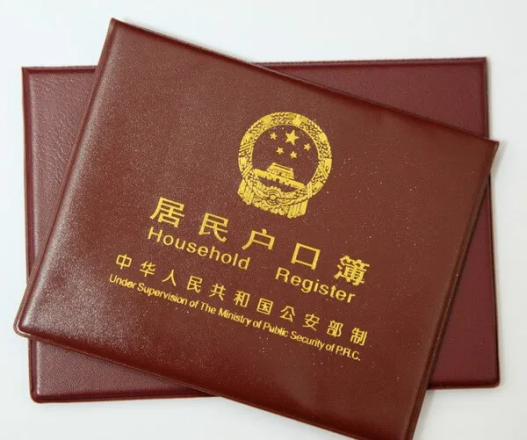
On 22 May 2026, the Chinese Communist Party (CCP) regime quietly announced what seems to be a big change to the hukou household registration system, potentially benefitting hundreds of millions of migrant workers. According to Xinhua, the official news agency of the PRC:
“China's State Council has issued guidelines on providing basic public services based on where people actually live, rather than the location of their household registration, as part of efforts to support the country's people-centered new type of urbanization.
"The guidelines aim at ensuring that residents without local household registration enjoy the same access to basic public services as those with local household registration, known as "hukou," according to a notice issued by the State Council.
"The move will help meet people's growing needs for a better life and is key to improving the quality of urbanization and boosting domestic consumption, the notice said.
"The guidelines outline measures to strengthen educational support for migrant children, and encourage more cities to expand public rental housing coverage to residents without local household registration but with stable employment.
"Household registration restrictions on participation in employee social insurance will be fully lifted, and access to basic medical coverage and employment services will see improvements.
"The guidelines also call for gradually extending basic public services, including child welfare, elderly care, social assistance and disability support, to residents without local household registration, while easing household registration restrictions.”
This apparently monumental announcement barely caused a ripple in domestic and international news media. The text of the Xinhua article is revealing:
• These are guidelines, not directives.
• Note the tentative phrasing – “aims to ensure…”, “access …will see improvements”, “gradually extending…”, “easing .. restrictions”
• Cities are "encouraged’ to expand public rental housing, but only for those with "stable employment’. Most migrant workers do not enjoy long-term contracts; they typically work in transient sub-contracted jobs in factories and construction, and are now the backbone of China’s 200 million-strong gig economy workforce.
• There is no mention of how this expansion of public services is funded yet the government sees this move as key to "boosting domestic consumption’.
Nevertheless, it is likely that this policy change, if implemented in good time could lead to greater flexibility of the labour force and aid economic recovery:
• Migrant workers would have incentives to bring their families in the countryside to join them in cities if free education and affordable public housing and health care becomes available
• Provided central government provides more finance (issuing yet more bonds?) to urban local authorities, some could buy up huge stocks of unsold private housing from the 5 year old property slump and rent them out to incoming migrants as public housing
• Migrants in contracted employment would gain social insurance in any urban job, and this would enable enterprises in top tier cities to more easily attract technically skilled and professional workers
• Migrants typically save much more than urban residents, taking precautions out of much greater insecurity. If this is unlocked in the medium to longer term, the money would likely be spent on everyday consumer goods and services, boosting the domestic economy
Smaller cities in largely rural provinces would however face immense pressure from short-distance migration, with insufficient funds to quickly expand education, housing and public services. Older generations who have seen so much policy changes and social turmoil may still decide to stay put to hang on to their village house and arable land plots, their ultimate safety net.
What is the Hukou system?
Before discussing why "boosting domestic consumption" is mentioned, below is a brief recap on the hukou household registration system within the context of major economic and political changes in China in recent decades.
After their 1949 civil war victory, the CCP imposed strict control over China’s population. Individuals' access to work and welfare was tied to their hukou, while their dianwei (workplace unit) was expected to take care of them and their family’s needs from cradle to grave. Government permission had to be obtained to change jobs and location, but any such move did not change the person’s original hukou. This system kept over 80% of China’s population tied to the countryside, until the end of the Mao era in 1976.
By that time, the cumulative effects of multiple disasters brought the PRC to its knees. The utter failure of the Great Leap Forward in 1958, an utopian attempt at forced industrialisation, which led to agricultural collapse and three years of famine in 1959-62, during which around 60 million starved to death, was followed by the upheaval of the 1966-76 Cultural Revolution, a wasted decade for hundreds of millions, leaving the CCP shell-shocked, the country in chaos and the economy in ruins.
“Let some people get rich first” (Deng 1978)
Deng Xiaoping took over in 1978 to steer the regime towards recovery. He opened up the economy to foreign investment through Shenzhen and 4 other Special Economic Zones (SEZ) along the coast, loosening up price controls while allowing state-owned-enterprises to produce beyond planned quotas and engage in market trading of surplus products.
Hong Kong and Taiwan-based entrepreneurs were the first to establish factories in Shenzhen and the other coastal SEZs, seizing a historic opportunity to exploit mainland Chinese labour to manufacture textiles, footwear, furniture, toys and household goods. Soon to follow were Western and Japanese giants – Volkswagen, Coca Cola, General Motors, Honda, Panasonic, Motorola, Siemens, Nokia, Proctor and Gamble, etc. - establishing more technical and capital-intensive manufacturing for the expanding domestic market as well as for export.
During the 1980s, younger people in the countryside started to migrate to the coastal SEZs as factories multiplied. Shenzhen grew from a sleepy village of 30,000 across the border from Hong Kong to a small city of half a million by 1988. (It then grew to 13 million by 2018 and to around 18 million today, China’s sixth largest megacity). Many cadres became wheeling-and-dealing managers of profit-making state-owned enterprises now freed up from rigid central control. The regime devised a two track price system to lessen the shocks of market forces, but this enabled cadres to use their insider connections to buy goods at state-subsidised prices and sell them at much higher open market prices.
Workers were soon angered by cadres’ arbitrary exercise of new managerial powers and widespread corruption, as well as the chaos and hyper-inflation which eroded their wages’ purchasing power and even their "iron rice bowl" job security. Students and intellectuals became disillusioned by social instability caused by disruptive market forces, uncertain about their future government jobs and the absence of political reforms. This led to nation-wide protests for democracy and against corruption focusing on Beijing, culminating in the CCP regime facing an existential crisis and its subsequent bloody crackdown on students and workers on 4 June 1989.
Tiananmen massacre 1989 - turning point
Shunned by western governments in the immediate aftermath of the Tiananmen massacre, as well as reeling from the collapse of the Soviet Union and Eastern Europe, the CCP under Deng and then his successor Jiang Zemin survived the 90’s by offering further sweeteners to western capitalism - joint ventures to exploit cheap labour and China’s growing market, as well as placing large orders for western industrial products - machine tools, technical equipment, chemical fertilisers, telecommunications, rail, cars, industrial vehicles and civilian aircraft.
Whilst the CCP’s conservative wing were appeased by the Party State retaining control of strategic areas of the economy by consolidating defence, technology, telecommunications, shipping, steel production, energy etc into large national state enterprises, Jiang gave technocrats and reformists the go-ahead to push through extensive privatisation of many smaller state-owned-enterprises, along with privatising land leases (all Chinese land today is still technically owned by the State). Meanwhile Jiang, in the wake of Tiananmen, lost no time in stepping up control and surveillance of the population, and later established the Great Fire Wall to deny Chinese citizens free access to the World Wide Web.
During this free-for-all get-rich-quick era under Jiang Zemin (1989 – 2002), sometimes termed “the Wild East”, Jiang changed the CCP rules to enable entrepreneurs, professionals and business managers to become Party members. This led to the CCP membership rising rapidly from around 50 million in 1990 to 80 million in 2010. Millions more every year applied to join, as Party membership was the gateway to prosperity, privilege and every corrupt practice under the sun.
The newly established giant state-owned enterprises in the 1980s and 1990s were generally quite inefficient, struggling to raise productivity without being able to dismantle “iron rice bowls" of relatively well-paid urban workers with long service records and some capacity to push back. Only from 1998 onwards did the State act over a number of years to dismantle the job security and social welfare framework of SOEs. However, the new private sector, kick-started by external investment, was the driver of double digit GDP growth. Foreign companies made monumental profits. For some. like Volkswagen, Motorola and Coca Cola, China became their most crucial market. Joint ventures soon gave way to wholly owned enterprises after China was accepted into the WTO in 2001. By 2003, China surpassed the United States as the country with the largest foreign direct investment inflow in the world. Soon domestic entrepreuners emerged to join in the action, resulting in the establishment of companies like Alibaba, Tencent and Huawei, all eventually becoming huge internationally well-known companies.
The PLA became rich too
It is worth noting the origin of the PLA’s involvement in economic modernisation, since USA hawks now often assert that many Chinese companies are PLA-controlled. During its pre-1949 days as a guerrilla army, it sought to grow its own food and operated light industries in CCP-controlled areas. In the post 1949 Mao era, after the end of the Korean War, the PLA engaged in much industrial and agricultural production, rather than just military activities.
Deng understood the vital importance of the PLA and engaged it at the very start of economic reforms, because it had skilled personnel already in China’s major industries, and it controlled most communications and transport infrastructure (rail, all airports).
When Vietnam attacked and dismantled the Chinese-backed Pol Pot regime in Kampuchea/Cambodia in 1979, Deng ordered the PLA to invade Vietnam “to each them a lesson”. Instead, the PLA was beaten back by a battle-hardened Vietnamese army and Deng realised that the PLA was no longer the tough fighting force it was three decades before. Still, Deng was a leading military veteran, and the PLA was his powerbase.
By the mid-1980s, when the CCP was no longer concerned about defending itself against invasion, Deng reduced the bloated and inefficient PLA from four to three million (still the world’s largest standing army in 1991 after the breakup of the USSR), but the PLA top brass continued to wield influence and expanded their trading activities. With its connections to defence, communications, transport and engineering industries the PLA quickly launched huge conglomerates like the Poly Group (headed by Deng’s son-in-law) which exported military hardware, and the New Era Group which imported defence electronics, aviation and precision technology, as well as thousands of smaller-scale companies. PLA enterprises operated mines, telecoms, factories making vehicles, textiles and pharmaceuticals, construction companies building apartment blocks, and even fee-paying hospitals, hotels and other services. The PLA also held much strategically located land which it profitably leased to others. Both Deng (1993) and Jiang (1998) tried to rein in this vast range of enterprises, not to mention massive corruption, which was further eroding the PLA’s capacity as an actual armed force. Jiang’s successor Hu Jintao had even less success, and the endemic corruption continued, until Xi Jinping’s mass purges of the PLA top brass in 2012 and in 2018.
See these references: 1, 2, 3.
Migrant labour, their hukous and growing militancy
All these enterprises, PLA, domestic private enterprise or foreign multinationals, had access to migrant youth from the countryside with little experience of industrial work, and minimal capacity to fight for better wages and conditions. Basic labour protection laws introduced in the mid 1990s were largely bypassed or ignored. There was extensive use of child labour.
In the past four decades, around three to four hundred million, have migrated from the countryside to work in cities, while about another hundred million have migrated from small towns to larger cities. The urbanised population rose from 18% in 1978 to 60% in 2017, the fastest rate worldwide historically. It is now about 67%.
This massive migrant workforce, with their rural hukous, is super-exploited under the harshest working conditions, repressed by an unholy alliance of employers, local government and the state-sponsored trade union, and deprived of social insurance and public services like health, housing and education for their children.
The maturing manufacturing networks, concentrated in geographical hubs, with young, increasingly skilful migrants enduring 12+ hour shifts 6-7 days a week, later led to more complex technological production relocate profitably from west to east. 2007 saw the first iPhone made in a Chinese factory, owned by the Taiwanese manufacturing company Foxconn and relying on a complex supply chain of components from all over the world.
Over the years, whilst significant numbers of migrants (around 100 to 150 million) have secured urban hukous, through specific local schemes, spheres of employment, or bribery, a large majority (250 to 300 million) have remained as migrants. Migrant children inherit their parents’ hukous even if born in the city their reside in. Some get "left behind" with grandparents either in other urban areas (25 million) or in villages (41 million) but a majority (estimated to be around 70 million in 2026) live with their parents in cities, with no access to public education and health care.
A further twist to the supply of migrant labour was the one-child policy, introduced by Deng in 1980. The post-Mao regime was concerned that large families encouraged during Mao’s era was about to cause a population explosion, depleting the country of food, water and other resources, weakening its drive for modernisation. An estimated additional 13 million children, called "heihaizi" (literally meaning black children) were born, who had no birth certificate and no hukou!
As the one-child policy was less well policed in the countryside, overwhelmingly heihaizi were rural. A rural child with no hukou had no access to anything, most crucially no land to farm on, so getting urban factory work was their only means of surviving. Soon there were several million heihaizi , under-age and illegal, working in factories by buying fake IDs. Factories were keen to hire them without even registration because they were more easily exploitable, costing the employer no taxes or social insurance etc.
As these youngsters grew up, they could not open bank accounts, could not travel legally and were often cheated out of wages. Eventually the Government had to concede to their existence and allowed them in 2016 to register for a legal hukou when the one-child policy was abolished.
As a result of this explosive economic growth under Jiang which led to massive wealth divide, rural poverty, and struggling welfare networks, the CCP was facing widespread social unrest and turbulence in factories. The manufacturing workforce was highly transient, in search of better pay, but also digging in to fight against unpaid wages, unsafe working conditions and factory closures, using wildcat strikes and occupations. (Factory owners would habitually defer paying wages until Chinese New Year, then liquidate their business in order to disperse their unpaid workforce, only to start up again elsewhere).
By this time, a generation of young labour rights lawyers, independent journalists, women’s rights campaigners (60% of migrants working in factories are women, as reported in National Bureau of Statistics of China: Present Workers Monitor and Survey Report 2009), and various NGOs supporting migrants and workers have emerged, increasingly effective in challenging factory management and local governments.
For years, migrants with temporary residential rights to work in cities were subject to continual harassment and extortion by police, through a Custody and Repatriation (C and R) procedure originally enacted to clear the city of vagrants, beggars and undocumented migrants. The police would pick up migrants at will, detaining them for long periods until relatives paid money to release them. Hundreds of C and R detention centres picked up on average two million migrants every year, until the infamous Sun Zhigang case in 2003. Sun, a 27 year old graphic designer migrant worker, was killed after brutal abuse in detention. This was the spark that led to widespread protest by an already very discontented migrant workforce.
2008 Labour Contract Law and the Automation Era
Hu Jintao had just taken over from Jiang in 2003. He quickly abolished C and R, and introduced other labour rights reforms from 2004 onwards under a new slogan, “harmonious society", to diffuse the rising tide of industrial militancy and social unrest. In 2008, he introduced the landmark Labour Contract Law. This required employers to issue formal open-ended contracts with minimum wage and severance pay, provide social insurance and other regulatory improvements. This was aimed to prevent cowboy practices of rogue employers from further provoking workers and causing widespread disruption to the economy.
The new law also lined up the official state-controlled All-China Federation of Trade Unions to conduct wage bargaining and mediation of disputes, to nip in the bud any development towards autonomous trade unions facilitated by NGO campaigners. Furthermore the regime started to offer incentives to enterprises to move away from low wage low skill manufacture to more high tech, automated production.
The regime aimed to transition away from horrific untrammelled factory work environments comparable to the worst industrial practices in Britain’s Victorian era, to patterns of wage exploitation currently in place in the 38 OECD countries, hoping to gradually increase wages and consuming power of workers in order to build up and stabilise the domestic economy, develop the rural hinterland and be less reliant on foreign investments and exports. More crucially, the CCP regime sought to continue its post-Tiananmen efforts to win back more legitimacy from the population by delivering improved working and living conditions, food supply, education, health and other public services.
Later in 2008 however, the global financial crisis broke - very bad timing indeed for the CCP regime. Just as after the 1929 stock market crash, the bursting of the housing bubble in the US triggered banking failures, and global recession, from which no country including China has yet to fully recover. And then there was COVID 19.
The CCP regime under Hu turned to rescuing beleaguered enterprises, and dragged its feet in implementing the 2008 Labour Contract Law while businesses smartly bypassed it with outsourcing, service agreements and other loopholes for a number of years. Nevertheless, this did signal the end of the low-tech, low wage manufacturing model.
Toys, textiles and shoe factories either moved to inland provinces with lower minimum ages, or out of China to Vietnam, Bangladesh, Cambodia and Indonesia where labour costs were lower and government regulations were more relaxed. Steered by strong government subsidies., manufacturers of vehicles, electronics and engineering goods e.g. Foxconn the iPhone maker, responded to this rising cost of labour by investing heavily in automation and robotics.
Robots in Chinese industry rose dramatically from 32,000 in 2008 to 132,000 in 2013, overwhelmingly imported from Japan, Germany, Sweden, Switzerland. and the USA, making China the world’s largest market for installing robots. Then, by 2025, after intensive research and development, China’s own robotics industry grew quickly and more robots were exported than imported. The government plans to expand robotics further.
Effect of automation on migrant factory workers
Even prior to 2008, some migrants have chosen not to seek an urban hukou for a variety of reasons. Some of the earliest migrants were exhausted and close to retiring, or returned home to farming after over 25 years of factory work; others fell into seasonal or insecure work. In some small cities which have relaxed access to public services to non-residents there was no urgency to convert.
Since 2008, the significantly restructured economy has led to the number of migrants choosing not to seek an urban hukou rising to an estimated 100 to 150 million, about 40% of rural hukou holders. In industrial districts with high automation, a significant proportion of rural hukou holders no longer felt confident enough about job security to apply for an urban hukou or to bring their left-behind children to join them in cities.
The automation era’s impact on migrant workers were several-fold:
• Migration to smaller cities further inland, where automated factories were fewer (but local minimum wage was lower)
• Factories relocating elsewhere laid off workers, who returned home to farming
• A small minority with higher technical skills secured better wages as technicians managing automated production lines and robots
• Some switched from manufacturing to construction, a more fragmented industry, where subcontracting and other casualisation schemes (akin to Irish lump labour in UK building sites in the late 1960s) enabled companies to bypass the 2008 Labour Law.
• Switching to the service sector – some 20 million former manufacturing workers were absorbed into ride-hailing or delivery jobs, representing up to 40% of delivery riders.
Slower growth after 2008
Up until 2008, as with the dynamic economies of Taiwan, South Korea and Japan in earlier decades, China’s officially published figures for GDP growth averaged around 10% annually, rising with the high tide of globalisation. While these published figures involved exaggeration because provincial cadres secured promotion and access to more bonuses and bribes on the basis of inflated growth data, the growth was clearly substantial.
Western-owned enterprises or joint ventures secured huge profits, while domestic private enterprises rapidly geared up. The economic growth was very uneven, leaving hinterland provinces behind, and often involved wasteful prestige projects. This pace of expansion could not be sustainable, after the one-off dividends of a young workforce, urbanisation, expansion of tertiary education, WTO entry, and leasing of land assets hadbeen used.
Up to just before 2008, neoliberalism reigned supreme after the collapse of the USSR, and Western powers confidently expected that economic liberalisation China would open up China to social and political reforms, leading to the CCP gradually dismantling its authoritarian one-party rule. No Western politician imagined back then that the CCP Party State could in two more decades devise and operate an aggressive version of mercantilist capitalism whilst further tightening its authoritarian grip on Chinese civil society and becoming an imperialist power.
But now China's strenuous investment in research and development and infrastructure, its manufacturing prowess, its expansion of influence in the developing world through its Belt and Road Initiative, its accumulation of huge trade surpluses athrough pervasive state-subsidised exports, its alliance with Russia and threats to Taiwan and neighbouring countries, and its harassment of the Chinese diaspora, are now disrupting a weakening USA’s global dominance.
The regime responded to the 2008 global financial crash with a massive fiscal stimulus package of 4 trillion Yuan ($586 billion USD), about 12% of its GDP, which contained unemployment and partially insulated China from the global downturn. Much of this went into infrastructure, such as creating a high speed rail network and green projects including waste and water management, afforestation, upgrading electricity grid and replacing older steel mills and power stations etc, as well as subsidies for automation and robotics already mentioned above.
Domestic demand was stimulated by aggressively lowering interest rates, offering tax cuts for vehicle purchases etc. Construction output had previously been increasing by about 20% annually even before 2008, but this stimulus triggered a massive skyscraper boom. 60% of skyscrapers built globally since 2000 have been built in China.
This launched the Chinese economy forward, though no longer as rapidly as before but further transforming its productive capacity during a period of tepid recovery in the global economy. However, this debt-fuelled growth created a huge speculative property bubble and other problems, which were left to Xi Jinping to deal with.
Xi Jinping’s era of consolidation
In 2012, when Xi came to power, official GDP growth had dropped from 9.7% the year before to 7.8%; the era of official double-digit growth had ended. (In Xi’s third term as leader, the official GDP target for 2025-26 is down to 4.5%).
The regime would boast about its GDP being the world’s second largest. But for thousands of years, due to their large populations, China and India had long been the world’s two largest economies. In the early 1800s, China under the Qing dynasty was the world’s largest economy.
A more useful gauge was GDP per capita, indicating that China is somewhere in the middle, much higher than India, just above Thailand and just below Malaysia, but significantly below its other neighbours, Singapore, Taiwan, South Korea, Japan, countries which have all broken through what mainstream economists call the "middle income trap".
So China has a dual character – on the one hand exerting the clout of an imperialist power, with some key leading-edge technologies, but still not yet out of the middle-income pack of developing countries. The top 10% of its population (around 100 million) may have a comparable standard of living to OECD countries, but the rest of its population, mostly on rural hukous, subsist on much lower income, and they are getting old before any prospect of Deng’s promise of “getting rich”. In 2020, during COVID 19, Premier Li Keqiang said that "China has over 600 million people whose monthly income is barely 1,000 yuan”, i.e. the bottom half of the population survives on about £110 a month.
Xi’s appointment was a compromise between factions unable to agree on how to address multiple problems corroding the CCP’s hold on power, including:
• Systemic corruption within the CCP and the PLA has worsened, becoming very rampant and widespread, sapping the morale of aging party veterans whose parents had participated in the 1949 revolution, and further eroding the population’s tolerance.
• The CCP’s informal social contract with the population post-Tiananmen could best be understood as “performance legitimacy”. Essentially the population grudgingly accept the CCP’s one-party dictatorial rule and even some corruption, as long as the promise of economic and social improvements to Chinese society as a whole is kept. This had become harder and harder to deliver as the economy slowed down.
• The domestic private sector continued to run ahead of the state sector, The bird was about to fly out of its cage. Companies like Alibaba and Tencent operated massive digital platforms comparable to Amazon and Facebook, with access to probably even more personal data than the government’s surveillance systems
• Despite heavy censorship, the internet has enabled sections of civil society to more confidently challenge the CCP, specifically on labour rights issues
• A whole host of demographic problems caused by the one child policy coming home to roost – an aging and diminishing working population, and birth rates dropping leading to waves of maternity hospital closures, coupled with people live longer and breaking pension systems
• The rapid and speculative construction boom has led to a housing bubble, while local governments still relied heavily on land leases to developers for income
• Real national and local government borrowing has become dangerously high, with all major banks seriously saddled with bad loans
Xi Jinping undertook drastic actions to re-establish strong control of the economy and of civil society, in the name of national security and social stability, and in doing so, himself wrest personal control of the CCP:
Starting in 2012, very high level cadres and military top brass have been purged in an ongoing anti-corruption campaign, while cadres personally loyal to him get rapidly promoted. This has continued and still ongoing.
In 2015, hundreds of leading human rights lawyers and activists were targeted in the “709” crackdown on 9 July - detained, arrested or "disappeared’. This was followed by activists, journalists and NGOs connected with organising or promoting workers rights campaigns and strike actions being severely repressed. Foreign journalists from news media giving unfavourable coverage of events in China were refused work visas for years afterwards. That continues to the present day.
In 2015, the "Made in China" ten year plan was launched, seeking to achieve world dominance in EVs, green energy, semiconductors, robotics, aviation through massive investment in research and development. In the same year, the Bank of China shook world markets with a 2% devaluation which supported further expansion of exports.
In 2016 the one child policy was abolished, replaced by a two child and then a three child policy. China’s population is in absolute decline – birthrate of 1.3 is way below the replacement rate of 2.1 (OECD average is 1.5), with no immigration to mitigate this dramatic decline. A necessary correction but probably too little, too late as too many workers of child-bearing age, mostly born as the only child in their family, have to care for 2 parents and 4 grandparents (known as 4-2-1 syndrome) and cannot afford to contemplate having children.
However, one positive consequence was over 14 million heihaizi gaining an open and legal identity, albeit still with rural hukous, able to open bank accounts, travel legally, get married. 14 million, 1% of the population, was too small to materially affect the rapid decline in population and birth rate.
By 2017, there were 20 million CCTV systems, combined with facial recognition software and large databanks to monitor Chinese citizens, rapidly rising to an estimated 700 million CCTVs, one camera per two citizens, most concentrated in urban areas.
In October 2017, "Xi Jinping Thought on Socialism with Chinese Characteristics for a New Era" was formally included in the national constitution, followed by the Chinese Parliament decision in 2018 to remove Presidential limits, and its decision in 2022 to appoint XI into his third five-year term of office.
In 2018, the most determined attempt to fight for recognition of independent unions and collective bargaining, at the Jasic factory in Shenzhen, led by an underground Maoist group, was brutally smashed.
In 2020 the monopolistic powers of major tech enterprises were accused of "disorderly expansion of capital" and heavily curbed, their social media influence curtailed and their compliance with Party priorities reinforced.
This iron fist approach was best exemplified by Xi’s handling of the COVID 19 outbreak – news blackout, strong denials, severe lockdowns, forcing production workers to continue working by confining them inside factories
Starting in January 2021, the speculative housing bubble burst. That threatened to bring down not just the banking sector but the whole economy, by imposing borrowing constraints on real estate developers. The government deliberately burst the bubble with its "three red lines", which were
• Liability-to-asset ratio must not exceed 70%
• Net-debt-to-equity ratio must not exceed 100%
• Cash-to-short-term-borrowing ratio must be greater than 1.
This created a severe liquidity crunch which caused widespread developer defaults, projects unfinished, collapse in new construction, house prices, consumer confidence. Since the GDP and local government income relied heavily on the construction industry, the effects of its collapse spilled right across the whole country, with no sign of recovery.
The COVID outbreak nevertheless greatly weakened Xi’s authority within the country and the Party, even though he forced through constitutional changes to secure his third term of office in 2022. Widespread urban protests, powerfully expressed by youngsters parading with blank sheets of A4 paper, brought down the extended lockdown, the first time Xi failed to succeed with brute force policing and conceded a tactical retreat. The post-COVID period threw up further problems to the regime:
• Graduate unemployment surged into double figures, peaking at 21% in 2023, and still remaining above 16% in 2026 after the government changed the basis of its "calculations”.
• As entry level urban jobs dried up, youth drifted into sporadic economic activity just to subsist – a trend called "lying down", a passive but widespread challenge to Xi’s narrative of a prosperous and strong China
• The pension system was predicted in 2019 to spiral downwards into insolvency from 2027 onwards. This led to the government in 2024 raising the retirement age for men from 60 to 63 and for women from 50 to 55 (except for women in managerial roles from 55 to 58), as well as increasing the number of contributing years from 15 to 20. Experts already note this is insufficient as a long term solution. The population is aging and living longer, and the massive 320 million strong gig economy workforce (at least 50% with rural hukous) overwhelmingly cannot afford or choose not to make "voluntary" social insurance contributions expected of urban workers. One more reason to delink the hukou system.
• The USA and the EU are actively pushing back against exports from China, deeming them to be hugely state-subsidised. Specific trade battles occur over semiconductors, AI systems and military-linked technologies.I ndeed, the PRC now dominate world production of solar panels, mobile phones, lithium batteries and electric vehicles, container ships, rare earth minerals needed for electronics. In 2026 China became the world’s largest exporter of machine tools, surpassing Germany for the first time.
• In May 2026, the regime banned citizens from opening overseas investment and asset management accounts with banks and brokerages. Many enterprises, influential entrepreuners, and family members of enriched cadres have invested heavily overseas for many years. This is a very belated effort to stem capital flow out of China, a sign of panic.
• As the economy continues to stagger on, observers of the regime have noticed more unusual signs of purges of Xi’s own supporters and more visible factional strife within the CCP. The extent of purges of senior commanders with combat experience suggests that the PLA may not have the capacity to launch an attack on Taiwan, but a desperate regime may take reckless steps nevertheless.
A closer look at the Housing Bubble
China’s domestic economy, five years after the housing bubble was burst, is still mired deeply in debt. According to official data from China’s National Bureau of Statistics, home prices in 70 major cities are still below 2021 with no sign of recovery, and property investment in 2026 down 16% compared to same 5 months in 2025. New housing starts have collapsed by 60% from the 2020 peak.
Property has long been the cornerstone of the economy, representing about 85% of most households' wealth (compared to 25-30% in the USA), hence a much stronger link to consumer confidence. Since 2020, developers liquidated with huge unsold stock and massive defaults amounting to $150 billion USD, leaving banks with bad debts, many households in double-digit negative equity and local government finances plummeting as land sales, their main source of income, have fallen by about 40-50%. Local government relied on bonds and other financing vehicles to fund infrastructure projects but are now having to cut back as their debt mounts, estimated to be about 100 trillion RMB (13 trillion USD), much of which was borrowed with the expectation of continued rising land lease sales.
As the construction industry, once representing 25% of GDP, contracted sharply, many jobs have gone, including those in manufacturing sectors supplying cement, steel, timber, furniture and household appliances.
This has spurred the vast majority of households to preserve savings and paying off debt rather than respond to the government’s attempts to boost domestic consumption. Recovery has been highly uneven, concentrating in the most prosperous coastal megacities particularly in those high tech AI development hubs e.g. Hangzhou, home to Alibaba and robotics firm Unitree, while second-tier cities continue to struggle with massive over-supply. Small rural towns are faring even worse. Empty properties in China total tens of millions, enough to house several European nations' entire population.
To sum up, this latest move to change the hukou system is a part of the regime’s attempt to address a toxic cocktail of adverse economic and geopolitical challenges. The State Council is following a number of coastal provinces and cities who have already taken local initiatives in the past few years, usually competing with each other to coax migrant workers with technical skills to stay.
Rural hukou holders who could not previously buy and sell urban property have benefitted least from capital gains during the housing boom from 1980s to 2021, when it collapsed dramatically. With a stagnant property sector, the present round of hukou reforms merely seeks to tempt or prompt rural hukou holders to part with their savings rather than enable them to catch up with their urban compatriots. Most are too wary of government ploys to take the bait.
Xi’s perceived invincible power and control of the CCP may be a mirage and the regime’s sustainability is less secure, but for us, the greatest obstacle to real change is the difficulty for a strong workers’ opposition movement to emerge.
Some references
General background
https://thediplomat.com/2024/08/china-unveils-ambitious-5-year-plan-to-overhaul-the-hukou-system/
https://blogs.lse.ac.uk/cff/2024/08/06/politics-not-economic-reform-a-review-of-chinas-third-plenum/ (George Magnus)
https://www.cecc.gov/recent-chinese-hukou-reforms
News
https://english.www.gov.cn/policies/latestreleases/202605/22/content_WS6a104f0cc6d00ca5f9a0b2d2.html
https://triviumchina.com/2026/05/25/state-council-calls-for-decoupling-public-services-from-hukou/
https://socialistchina.org/2026/05/25/china-takes-important-step-towards-hukou-reform/
Migrants returning to countryside to start small businesses
https://journals.sagepub.com/doi/10.1177/21582440251340775
https://pmc.ncbi.nlm.nih.gov/articles/PMC12270181/#sec015
Workers' struggle
https://madeinchinajournal.com/2020/06/25/leninists-in-a-chinese-factory/
https://en.wikipedia.org/wiki/Custody_and_repatriation
Pensions and demography crisis
Youth unemployment
Comments?We welcome replies, corrections and debate pieces. Contact us