
The far-right Danish People’s Party did well in Denmark’s general election on 24 March. It won 9.1% of the vote and 16 seats, a big advance on 2022, though still behind its 21% in 2015.
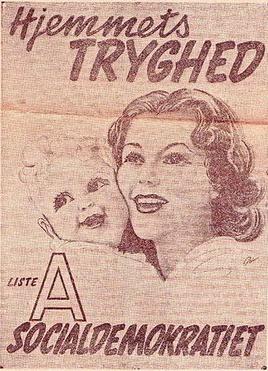
The Social Democrats, long Denmark’s major party (it got 42% of the vote under Denmark’s strict-proportional-representation system in 1960 and 1964) came out as the biggest party, despite poor poll ratings at the start of 2026.
Mette Frederiksen has been prime minister since 2019 and won re-election in 2022 from wide approval of her handling of the Covid pandemic. This time her stand against Trump’s threats to Greenland, and maybe also her new promise of a wealth tax, brought some recovery. But the Social Democrats’ vote share was the lowest since 1903.
That tells us, first, that a wealth tax is no fantasy, but something possible even for a right-wing Social Democrat leader; secondly, that it is only a small step in recouping for the working class the loot extracted from us by the rich; and third, that anti-immigrant policies do not work even as a cynical electoral gambit to scoop the far right.
Shabana Mahmood’s plans in Britain are modelled on Frederiksen’s policies, but in Denmark they have not stopped the rise of the far right.
With proportional representation, Denmark almost always has coalition governments. Most parties are in either the “red bloc” led by the Social Democrats or the “blue bloc” led by Venstre (the main conservative party, whose name confusingly translates to English as “Left”). Often governments are of either the “red” or the “blue” bloc, with some parties in the bloc taking government positions and others giving external support. Since 2022 Frederiksen had chosen to run a “centre coalition” rather than “red bloc” government.
The Red-Green Alliance, a merger of the Mandelite SAP with the old Communist Party, Maoists, and others, was in “external support” to Frederiksen’s government 2019-22, but not since 2022. It did relatively well, with 6.3%, still below its high of 7.8% in 2015.
The second party in the “red bloc” was the Green Left, Danish component of the European Green Party (though formally named Socialist People’s Party and originating as a splinter from the Communist Party). They made modest gains.
The Moderates party, founded in 2022 and standing outside both “red” and “blue” blocs, holds the balance of power in the new Parliament, and will be the focus of coalition-making.
The rise of the far right is far from automatic and inexorable. But all the evidence is that continuation of attempts at middle-of-the-road government will not stem it. And dismissing the far right as no worse than the “red bloc” won’t, either.
Comments?We welcome replies, corrections and debate pieces. Contact us