
By Luke Woodward
This summer I travelled to Peru and made contact with the Peruvian educators’ union SUTEP with the intention of starting an NEU–SUTEP solidarity network.
The Sindicato Unitario de Trabajadores de la Educación del Perú was founded in Cusco in 1972. It is Peru’s largest union and represents around 350,000 of the 420,000 teachers and support staff in the country.
I was invited to a meeting with the General Secretary, Lucio Castro Chipana, and the National Executive on 22 July at their union building in Lima, near the beginning of my trip, and had a very productive conversation with them. They were appreciative of the initiative, and interested to hear about educators’ struggles in the UK.
They were also able to talk about the challenges they face in Peru, a country in which 80% of the entire workforce is informal, meaning they are one of the few unions in the country that is able to fight and win for workers.
Monthly contributions to the union are voluntary and range between about £0.50 and £1.00 per month. It is an enormous country with far-flung schools, and it can be extremely difficult to meet and support members face to face.
They are a militant and independent union that is critical of the government, and determined to fight and win to improve conditions in schools. Their core demand is that the Government commit 6% of GDP for education, ending the austerity that requires the public to pay for the cost of capitalist crisis.
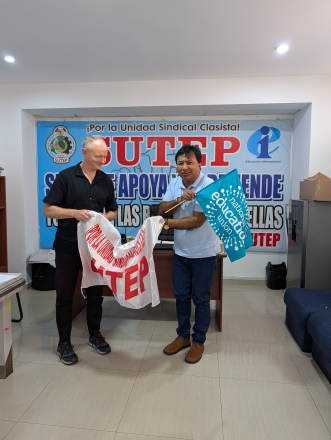
After the meeting, we exchanged flags, and the Executive put me in touch with their Committees in Iquitos and Arequipa.
In Iquitos, I had another great chat with the Committee about educators’ struggles. The district of Loreto is a challenging place to organise, with many schools in the Amazon rainforest only accessible by small plane or boat. During a visit with the Committee down to the harbour, the press approached Alex Ricopa, District Secretary of SUTE Regional Loreto, and he was able to deliver a message to the newly elected President of Peru, Keiko Fujimori, demanding that she fund education properly. We were then invited to join together and shout three times the union chant: “¡SUTEP SUTEP SUTEP, combativo y valiente!”
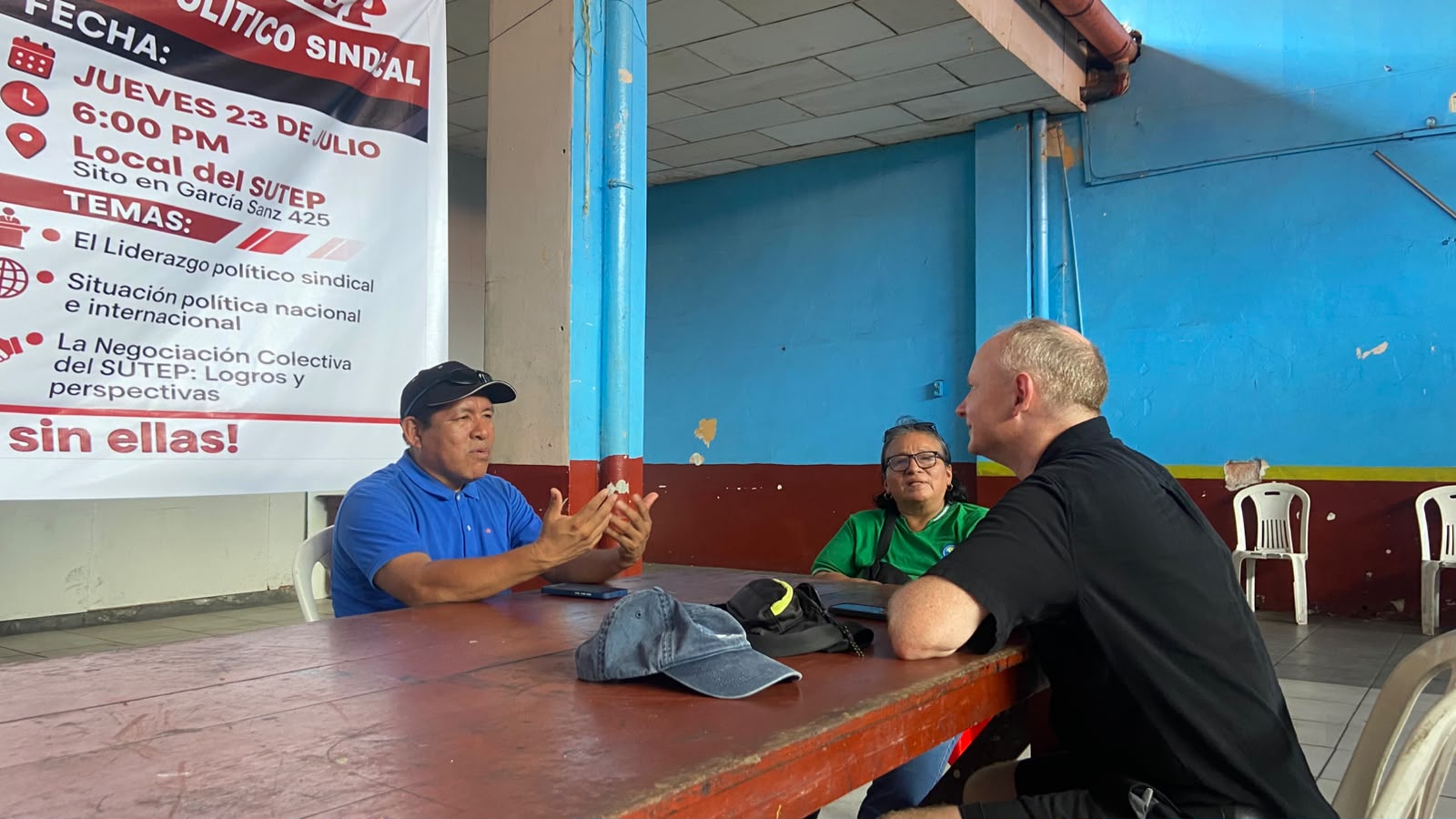
Finally, in Arequipa, in the south of Peru, I met with District Secretary Hamer Villena for another productive conversation. Hamer talked further about the challenges facing trade unionists in Peru, but also talked about their willingness to adapt and innovate to recruit new members in the region. He was surprised to hear how strict our balloting rules were, and said they wouldn’t dream of letting the government have so much control over when and how they strike.
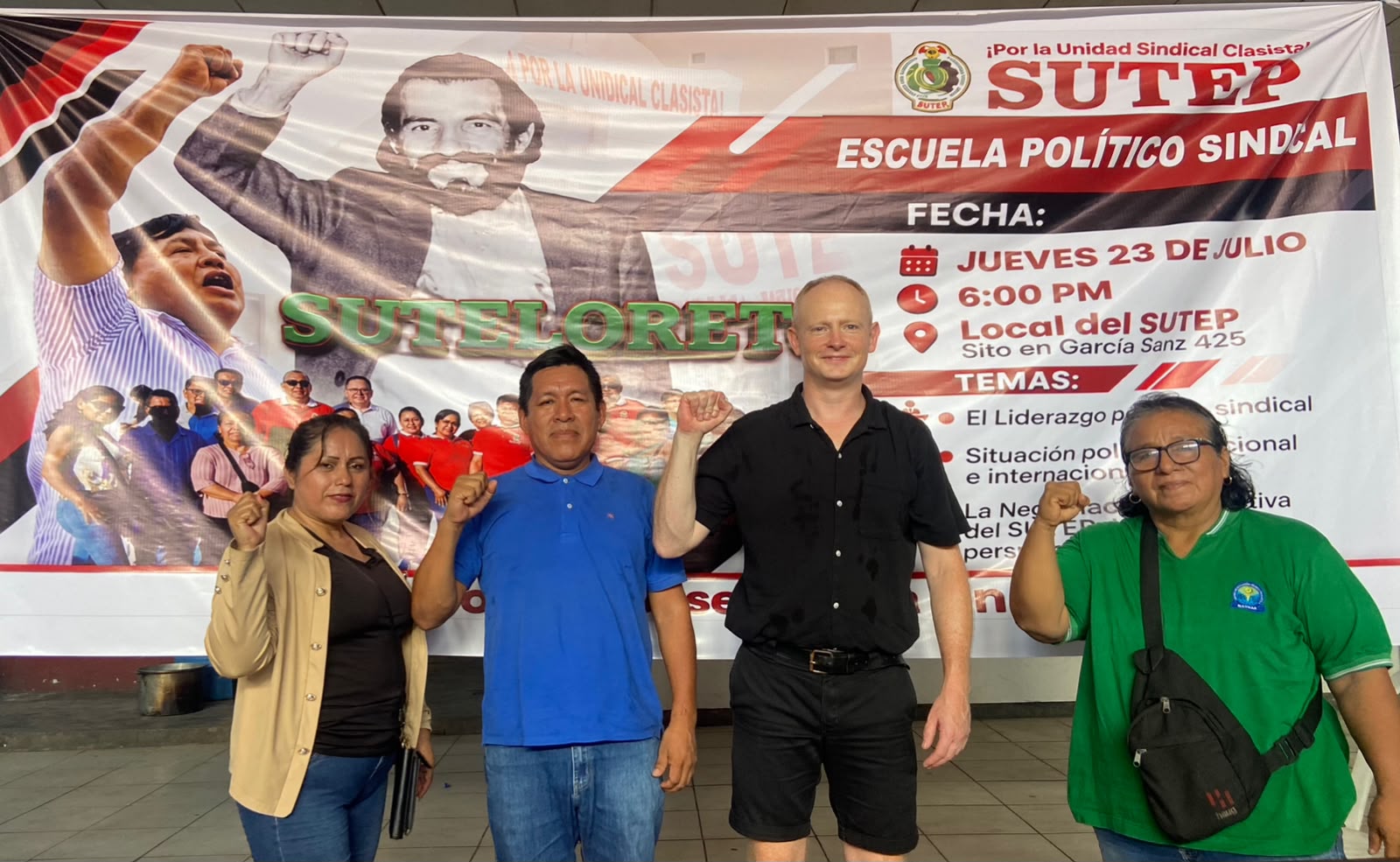
In all three cities, I was struck by the class consciousness of the union, where they see their workplace struggles as part of a broader struggle for working-class emancipation from oppression. I was also impressed by their amazing buildings, won through struggle, and occupied rent-free, where they organise meetings and which they use as headquarters in towns and cities around the country.
I was really pleased with the connections made during the visit, and I will follow up by raising a motion for B&NES (Bath and North East Somerset) NEU to affiliate to SUTE Loreto. I will also raise a motion to Conference asking the NEU to establish and maintain a formal solidarity link with SUTEP educators in Peru.
For solidarity with our fellow educators internationally in their struggle for better pay and conditions.
For workers’ rights and free, independent unions for our fellow education workers across the globe.
Comments?We welcome replies, corrections and debate pieces. Contact us